
Today I want to share 11 classic British expressions with you. Whether you want to convey how happy you feel, how much you’ve had to drink, or anything in between, there’s a British phrase, idiom, or saying for you.

British Expressions
There are enough British expressions to fill an entire blog, so I’m going to focus on my favorites in this post. I’m also going to focus on more unusual ones (for Californians, anyway), so don’t expect to find words like “bloody” and “cheeky” here.
Some of the sayings on my list are English idioms I learned when researching UK language before I moved to London. Others are phrases I picked up once I became an expat.

It’s always amazed me how many there are, and how much they bewildered me when I first moved here from San Francisco.
I thought the English language was pretty similar in the US and the UK, but my first few months in London were confusing at best.
Sometimes I would speak with someone and feel like I only understood two out of every five words they said. Other times I had to stop people and ask them to explain what the British expressions they were using meant.
I hope this blog post with common idioms in the UK helps you avoid the confusion I faced and entertains you along the way.
If you need extra help, the book Watching the English is the expat bible. I’ve written about it a million times, but it’s honestly the most useful book you’ll read about English culture. It’s a must if you want to fit in here.
1. Ta
I’ll start with the simplest. Or the shortest, anyway. When I first moved to London, I made friends with an English guy who was always saying “ta”.
I had no idea what it meant, so finally asked someone why he kept saying it. They told me it meant “thanks”.
I told a family member about this, and they said my grandmother, who grew up in Glasgow, used to say “ta” all the time. Apparently I missed that.
I’m glad I learned the word when I moved to London, though. People say it all the time here, and it’s a useful one to know.
2. Pissed
In California, if you say “I’m pissed”, it means you’re angry. In Britain, if you say “I’m pissed”, it means you’re drunk. To get pissed is to get intoxicated, and British people do it well.
Drinking is a national sport here, and if someone asks if you want to get pissed tonight (or today, or this morning) they mean it. Ready your hangover cure. You’ll need it.

3. Chuffed
In my early expat days, no British saying confused me like “I’m chuffed”. The first time I heard it was when I received an email from a business I’d featured on the A Lady in London blog.
I wrote a glowing review of their restaurant, and I thought they’d be pleased. Instead, I received a message saying “we’re really chuffed you wrote about us”.
Something about the word made me think it meant they were angry. I was confused. I was upset. I was temped to write back with something equally negative.
Thankfully I thought to Google this most curious of British expressions first. When I did, I discovered that it meant “happy” or “pleased”.
Suddenly things made a lot more sense. Now I hear the expression all the time and I still laugh at the memory of my first encounter with it.
4. Trolleyed
Back to booze (I told you they drink a lot here), my favorite alcohol-related British idiom is “trolleyed”. This lovely word means “highly intoxicated” or “extremely drunk”.
To use it in a sentence, you might hear someone saying to a friend “let’s get trolleyed tonight” (or this afternoon, or this morning).
I always imagine this British saying to have originated when someone got so drunk they had to be pushed home in a shopping cart (called a “shopping trolley” in the UK). Whatever the etymology, it puts a smile on my face when I hear it.
5. Cuppa
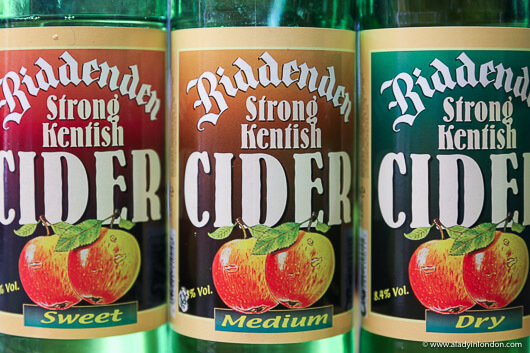
If alcohol isn’t your thing (or copious amounts of it, anyway), you might like the next British colloquialism on my list better. This one relates to the British tea culture.
A “cuppa” in Britain is a cup of tea. Cuppa…cup of…you can see where it came from. If someone asks you if you “fancy a cuppa”, they’re inquiring as to whether you’d like a cup of tea.
If you want to respond with something equally British, you can say “that’d be brilliant, ta” or “no, thank you, I’m trolleyed”.

6. Fantastic
I know, I know. “Fantastic” isn’t exactly an under-the-radar word. But I’m including it on my list of British expressions because it wasn’t until I moved to London that I discovered British people use it the same way Californians use “awesome”.
I was surprised and delighted in my first few months in the UK when I kept hearing people say “fantastic” every time something good happened.
I thought it was such a fun word to use, and I still do. Maybe it’s because nobody really uses it back home.
Over the last decade and more, I’ve tried to replace my use of “awesome” with “fantastic” to avoid being ridiculed (English people love to hate when Americans say “awesome”).
I’ve had mixed success (you can take the lady out of San Francisco, but you can’t take the San Francisco…), but I know I’ll be chuffed when I master it.
Then again, the reverse culture shock of getting made fun of by Americans when I say “fantastic” back in California might make me regret it.
7. Chat
So this is another one that could have you wondering why it’s on my list. But hear me out. In California, the word “chat” means to talk informally or catch up with someone briefly.
But here in the UK, “chat” takes on a whole new meaning for American expats in London like me. That’s because the word doesn’t just refer to talking. It’s a British expression that refers to banter.
For example, a particularly witty repartee is referred to as “good chat”. If it’s better than good, you can say it’s “diamond chat”. And if you’re into superlatives (and what American isn’t?), you can say it’s “double diamond chat”.
8. Suck It and See
The next British idiom on my list is one that always makes me laugh. That’s mostly because I only ever hear old men using it, and they never seem to be in on the joke. Or maybe they are and the joke’s on me. Either way, it’s funny.
“Suck it and see” means “try it and you’ll find out”. It’s just that it sounds so much like something else (ahem) that nobody but old men seems to feel comfortable using it.

9. It Does What It Says on the Tin
Another UK saying I’ve come to love is “it does what it says on the tin”. This one is self-explanatory because that’s exactly what it means: self-explanatory.
I don’t remember when I first heard this British expression or why I like it so much. Maybe it’s because it always makes me picture someone inspecting the back of a can of tomatoes in a supermarket.
I’m not sure why I find that funny either. Maybe I’d had one cuppa too many when I first heard it.
10. Spanner in the Works
Sometimes British expressions are doubly confusing because I don’t know the words that comprise them.
That was the case with “spanner in the works”, which means someone or something has impeded one’s progress toward achieving a goal. When I first heard this saying, I had no idea what “spanner” meant.
In fact, I didn’t know “spanner” meant “wrench” until a couple years ago when I bought my friend Rich’s book, Around the World in Cut-Outs.
When I discovered the two were synonyms, a light bulb went off in my head. Suddenly I realized “spanner in the works” was the British equivalent of the American expression “wrench in my plans”.

11. Knock You Up
Some British expressions are benign. Others are fully loaded. Which is most definitely the case with “knock you up”.
Where I come from, if your boyfriend’s father tells you he’ll knock you up first thing tomorrow morning, he’s promising he’ll get you pregnant at 6am. Awkward for most, but if you’re into that kind of thing, you can suck it and see.
In the UK, if your boyfriend’s father tells you he’ll knock you up first thing tomorrow morning, he’s promising he’ll wake you up at 6am. Fantastic.
Common British Expressions
I hope you’ve enjoyed reading about these British expressions and that they’ve helped you gain a greater understanding of idioms and sayings in the UK. If you’re interested in more classic phrases, my post about British quotes can help.
There’s a lot more to understand about British language, from the subtle use of sarcasm (“fantastic” can mean “not fantastic at all” if said in an slightly different tone of voice) to the different words people from different social classes use (Watching the English is a huge help again here).
But those are topics for different blog posts, and I’m off to have a cuppa. Ta for reading this.
Find this post helpful? Buy me a coffee!
New here? Join thousands of others and subscribe to the A Lady in London blog via email.
Some of the links in this blog post are affiliate links. At no cost to you, I earn a small commission when you click on them and make a purchase. It doesn’t affect the way you shop, and it’s a great way to support the A Lady in London blog.
Pin it!
Well, good thing I know most of them by now, but I still understand the confusion and had to LOL when reading. Fantastic.
I hadn’t known *It does what it says on the tin* and it makes me laugh. I have a constant and vivid imagination. I can see great descriptions on tins what those pelati / tomatoes actually DO. Well, I hope mine do nothing because… ew! 😀
I’m glad you enjoyed it!
😂😂😂😂😂
Very entertaining Julie and ‘bang on’. There’s another one for you!
Thanks, Neil. I like that expression, too!
Awesomeness overload 🤘🏻
I’m glad you think so!
Not sure if you’ve run into this one but I found it odd when my English fiancee would say he’ll “love me and leave me”… as in meaning, “I’m going to go for now” usually at the end or near the end of our conversation.
I told him to me that means that you slept with someone and are leaving them (for good) now!
Yeah, that one is great. I use it all the time now (so I’ll have to be careful when I go back to the States!).
This is brilliant! Thank you! I have to say, I usually read your entries while having breakfast, and after the news, so at that point of the morning I’m just finishing up my second cup of coffee. There I was relaxed, sipping my coffee and just as a get a nice good gulp I get to your example of “knock you up”. I nearly lost it. Luckily I managed to keep things under control but Lady, there was a near coffee everywhere moment. Thank you for such a great laugh. And for your great blog!
I’m so glad you enjoyed it (and I’m happy you didn’t lose your coffee!).
Loved this post. Most of them were new to me. Two others I know from a British boyfriend are: run off my feet (meaning very busy, overwhelmed) and plonk (cheap wine.) Ta !
You’re welcome! Those are fun ones to use, too.
I can still remember the facial expression and the “I beg your pardon?” reaction of an American student fresh from Kansas who came to share our house in Harrow, when one of the English guys asked him on his first night, “What time do you want knocking up in the morning?”
It still cracks me up every time I think about it. 😂😂
Haha, I can imagine!
When I visited London three years ago, I noticed people used the word “posh” a lot. The way in which they used it is the same way we use it here in the U.S., but they just seem to say it all the time when describing something classy or fancy. I love it!
Yeah, people say posh a lot in London, don’t they?
This a such a great post. I love how the British talk SO much!! 🙂 I am from Sacramento and Bay Area and would love to move there like you have! Great blog. Maybe i’ll see ya there one day. 😉
I hope you can someday!
Some of these expressions I didn’t know. Ta !
You’re welcome! I’m glad you learned some new ones.
I am obsessed with all things British! My favorite saying is “chuffed” for some reason it makes me think of a person that is puffed up with happiness. Lol. And I thought Ta meant goodbye. So thanks or Ta for clarifying that. 😊
You’re welcome! I love “chuffed” too!