
I want to share my travel itinerary for 2 days in Skopje with you today. The capital of North Macedonia has an abundance of history and a rich cultural landscape to get excited about. It’s one of the best places to travel in the Balkans.
2 Days in Skopje
Skopje reminds me of Tomorrowland. I mean that in every sense of the word. In the Disneyland sense, it looks like a 1960s version of what the future thankfully didn’t turn out to look like.
In the modern sense, new futuristic buildings and public spaces are popping up everywhere in the capital of North Macedonia.
There are two reasons for this. First, in the 1960s an earthquake leveled most of the city. Skopje was largely rebuilt in the Brutalist style most people think of when they imagine communist-era architecture in the Balkans.
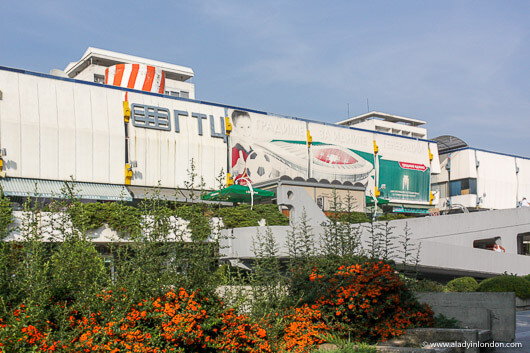
Much of the city center is characterized by gray buildings and strange space-age structures.
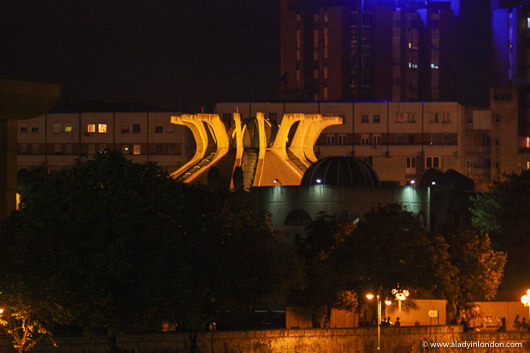
This is not least personified by the post office, which was created to resemble an insect. It looks vaguely reminiscent of the old spaceship ride at the entrance to Tomorrowland.
Second, the powers that be in Skopje went on a building spree at the beginning of the 21st century.
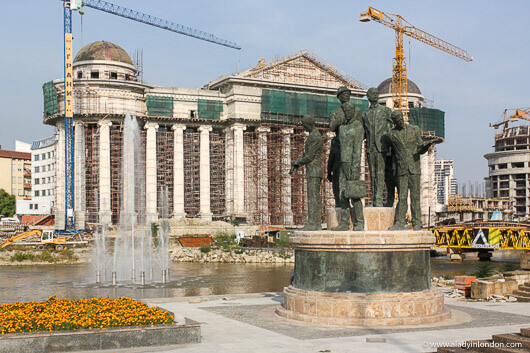
From the Museum of the Macedonian Struggle to the triumphal arch, overabundance of sculptures in public spaces, and grandiose statue-fountain-and-light-show combination in the main square, they created a lot.

Never mind that most of the construction was in the neoclassical style. Every city has to have its share of buildings that make it look like it was once the center of a great empire, right?
And Skopje does have some claim on that status, what with North Macedonia being the birthplace of Alexander the Great.
How to Get to Skopje
I witnessed all this and more when my 2 days in Skopje began following a 3-hour-and-45-minute bus ride from Lake Ohrid, where I’d just traveled.
Where to Stay in Skopje
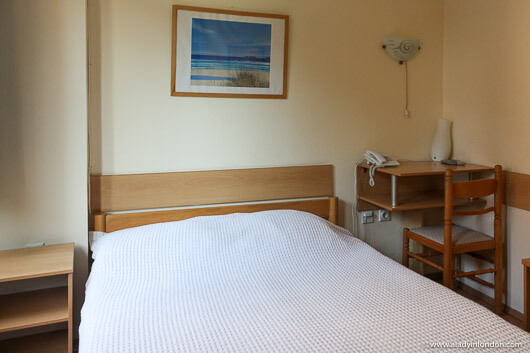
After taking a taxi to Hotel 7, my accommodation in Skopje for the next couple days, I settled into my room and took a 15-minute walk into the city center.
Things to Do in 2 Days in Skopje
On the way I walked down a large pedestrianized street filled with cafes, bars, and shops.
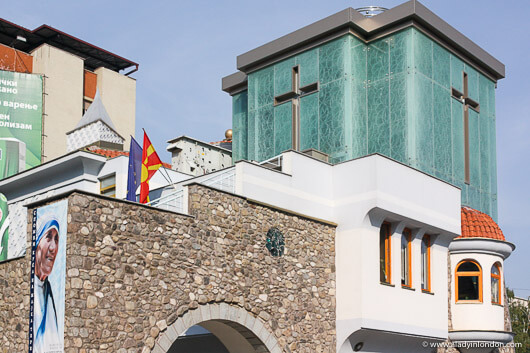
At one point there was a small square next to which stood the Mother Teresa Memorial House, a museum dedicated to the life of one of Skopje’s most famous inhabitants.
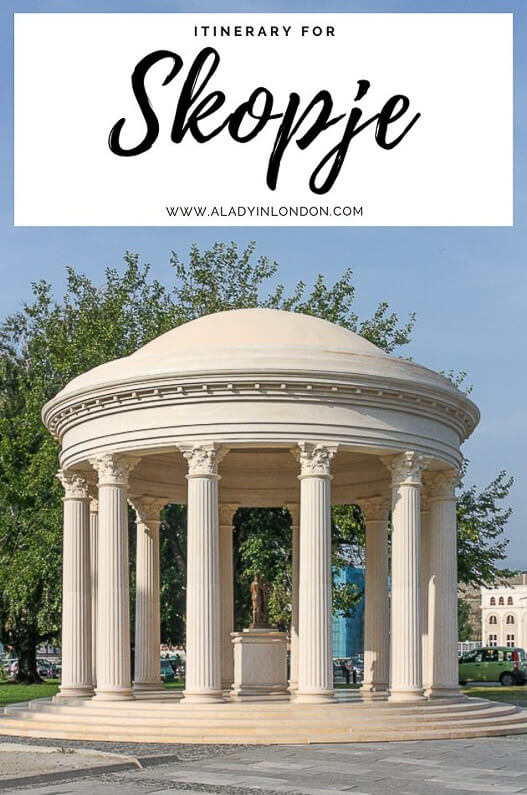
A bit farther up the street was the main square, Plostad Makedonija. In it was the aforementioned grandiose statue-fountain-and-light-show combination, as well as a Greek-looking temple and a smattering of sculptures.
It was surrounded by an eclectic mix of architectural styles that ranged from fin de siecle to “Tito special” and a contemporary building that was buried under scaffolding. It was intense.

Plostad Makedonija square was built right next to the Vardar River, over which the historic Kamen Most (Stone Bridge) rested.
Said structure transported me from the modern era into the Ottoman Empire. Gone was Tomorrowland. Here was yesteryear.
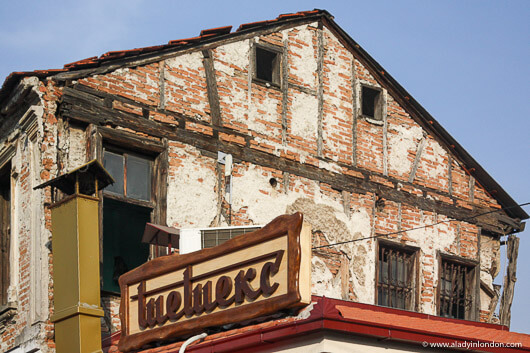
But as my 2 days in Skopje continued and I delved deeper into the Carsija neighborhood, I realized the narrow lanes and bazaar-like atmosphere were only a facade. In reality, this too was Tomorrowland.
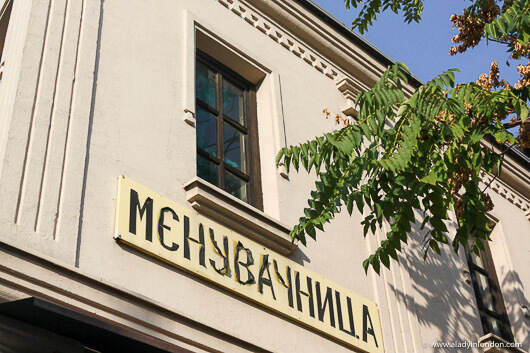
I walked past old Turkish baths that retained their 15th-century exteriors but now housed contemporary art galleries.
I ducked my head into historic courtyards that featured modern restaurants. And I walked down ancient streets with shops selling sparkling new gold jewelry and white wedding dresses.
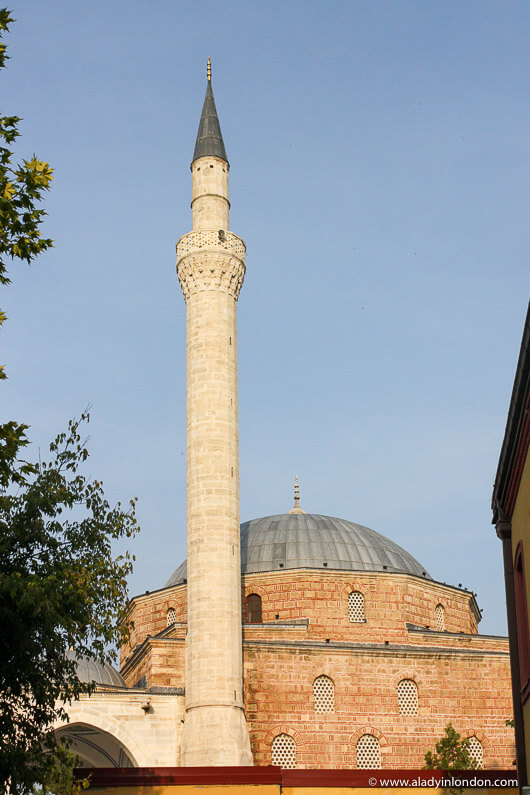
Up the hill was Skopje Fortress, which seemed to hold the promise of history. But it too was just a front. The entrance was closed, and inside the castle walls were bulldozers and land movers, all of which were working to make something modern.

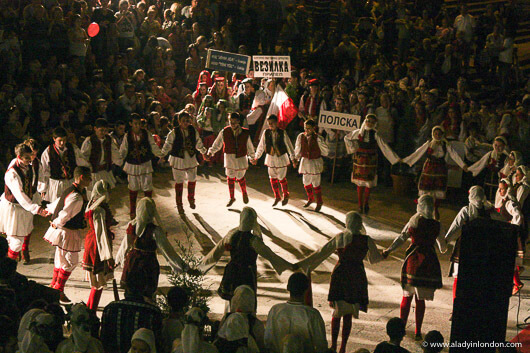
Back over the bridge, I stumbled upon a folk festival during my 2 days in Skopje.
A live band played traditional North Macedonian music, and large groups of children dressed in regional costumes took turns performing dances for a crowd in front of the river.
It was tomorrow’s generation celebrating yesterday’s cultural feats. It was perfectly fitting with its surroundings.
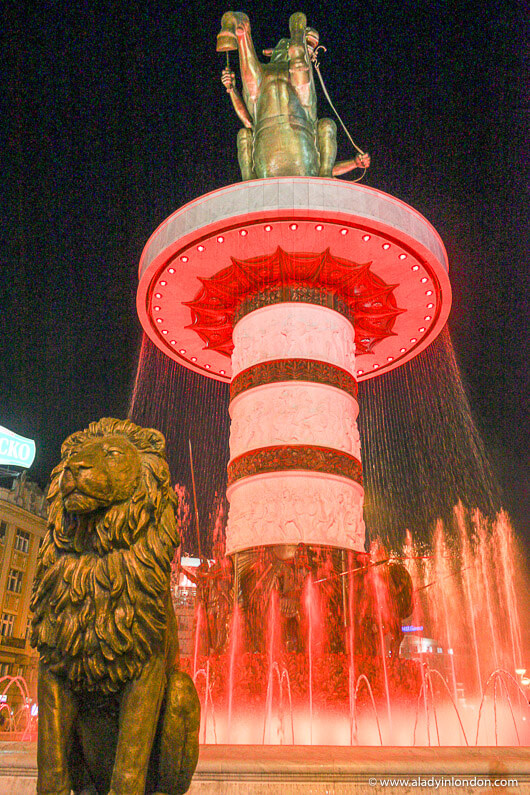
The following night there was more activity in the square. People were out in droves—old people, young couples, parents, children, babies in carriages—and everyone was enjoying the evening.
The fountain was lit up like Disney’s Main Street Electrical Parade, and it looked as if it were having a good time as well.
2 Days in Skopje
As I made my way back to Hotel 7, the pedestrianized street was booming with live concerts, busy bars, and pop-up restaurants.
If this frenetic scene was any indication of the Skopje of tomorrow, it’s going to be a very exciting place. I can’t wait to spend another 2 days in Skopje someday and see it all.
Find this post helpful? Buy me a coffee!
New here? Join thousands of others and subscribe to the A Lady in London blog via email.
Some of the links in this blog post are affiliate links. At no cost to you, I earn a small commission when you click on them and make a purchase. It doesn’t affect the way you shop, and it’s a great way to support the A Lady in London blog.
Pin it!
Wow, that is definitely a mix of architectural styles!
Emily – Yeah, it was really interesting to see them all together!
Are they gonna retain that Macedonian fortress? It’s beautiful. You’re right, Skopje if full of promise. I can imagine the possibilities.
It looks like they are going to retain the fortress, bluepop. They were bulldozing inside of it, but the walls seem to be untouched. I really hope they don’t change too much, as it’s a beautiful structure with so much history!
About the fortress, I think that they were rebuilding the old church that was revealed some couple of years ago.”In late 2006 and early 2007, research and excavation of the Skopje Fortress funded by the Macedonian government had finally commenced. Researchers discovered woodwind instruments and clay ornaments dating as far back as 3000 B.O.T. Excavation of the main fortress also revealed houses below the fortress’ visible level. The discoveries are believed to have belonged to inhabitants of Scupi on which the fortress was built. Archaeological excavations continued in 2009.[3]
In May 2010, archeologists unearthed the largest stash of Byzantine coins ever found in Macedonia at the fortress.[4]
After the foundations of a 13th century church (in fact, one of three) were found within the complex, the Cultural Heritage Protection Office actioned a project to restore it in the form of a church museum. Ethnic Albanian groups, with DUI at the forefront, claimed the site contained an older Illyrian structure, and that by virtue of their claimed Illyrian ancestry, that the site should be theirs” (wikipedia)
Thanks for the information, Nikola! That makes a lot of sense. I hope I can see the new museum on my next visit!
Heya Lady! Thanks for sharing your photos and experiences. It looks like a cool place to visit.
I stumbled on your blog by googling Macedonia.
Cheers!
OMG! There’s like European, Communist and Muslim architecture all in 1 place. Wanna go there so bad!
Yeah, it’s a really great city for architecture!