
Want to visit Bamako? Good. Today I’m sharing my guide to traveling to Bamako, the capital of Mali. This city on the Niger River in West Africa is a great place to get off the beaten travel path and into Malian culture.

Visit Bamako
When I started telling people I’d booked a trip to Mali, most of them wondered how such a seemingly obscure country had worked its way onto my list of places to travel. The answer lies in a class I took at Brown: West African Dance.
The professor’s husband was from Mali, and most of the dances we learned were from there. In addition to learning the dances, we also learned about the culture, food, history, people, and traditions of Mali.
It made me want to visit. Mali was added to the list.
Traveling to Bamako
Fast-forward a few years and my boyfriend and I found ourselves in need of some winter sun.
We booked a trip to Nairobi using frequent flier miles, and discovered that for a mere 50,000 Delta miles we could book a round-trip ticket from Nairobi to Bamako and then on to Dakar.
The ticket costs well over $1,500 in cash, so it was a bargain with miles. We started planning our trip, and I couldn’t wait to visit Bamako and other parts of Mali.
Mali Travel
Then we looked at the State Department warnings for Mali. They told us of kidnappings and terrorist activities in Timbuktu and the Dogon Country, which were on our itinerary.
Disappointed, we transformed our five-day stay into a two-day stay and decided to only visit Bamako and leave the other destinations for another trip to West Africa.

Arrival in Bamako
We arrived at Modibo Keita International Airport two days ago following a six-hour flight from Nairobi.
After clearing customs and negotiating with a taxi driver at the airport, we headed into Bamako, a bustling home to around 2 million people.
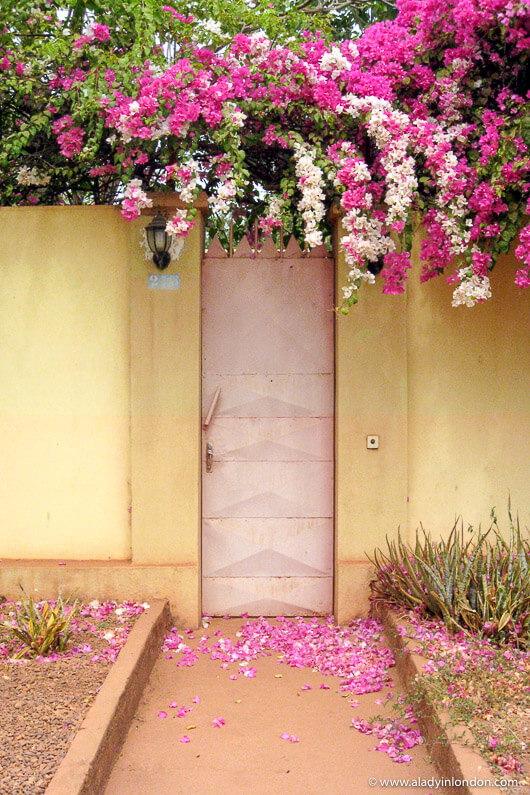
As we left the airport, we were surrounded on all sides by red. Red dirt, low red-brick buildings, and red roads were everywhere. It was as if we had landed on an inhabited part of Mars with its rust-hued, iron-rich soil.

Bamako Hotel
After 20 minutes we arrived at our hotel in Bamako, The Sleeping Camel. We’d found it online and weren’t sure what to expect, but it turned out to be a complete gem.
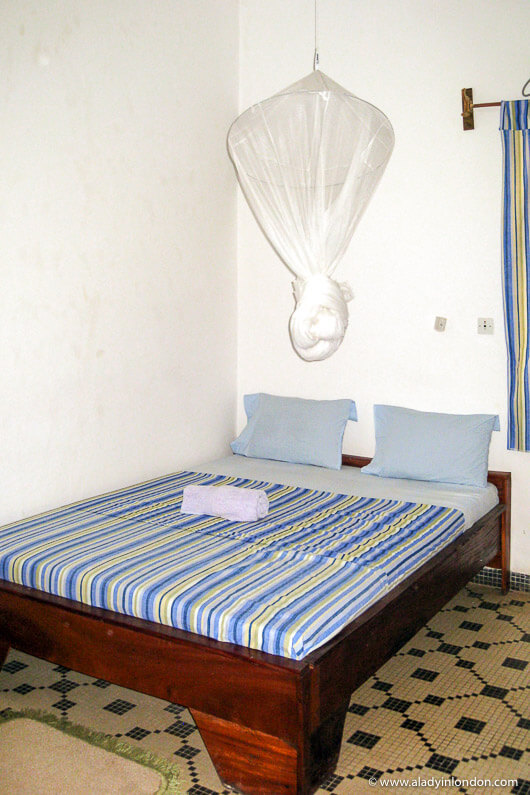
The owners, Claire and Matt, welcomed us to Bamako, showed us to our enormous air-conditioned room, and brought us two cold beers on the outdoor terrace to help us settle in.
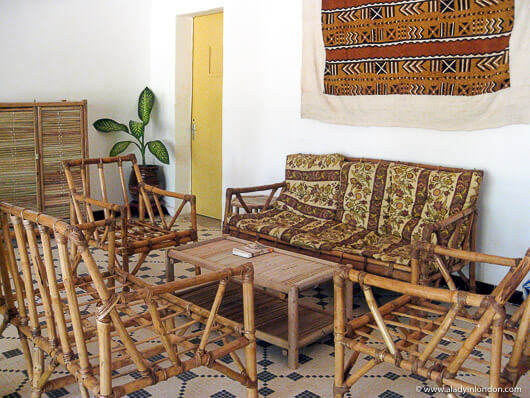
The hotel itself was housed in the former Moroccan embassy. It was sandwiched between the German and Senegalese embassies and across the street from the Egyptian one.
An EU ambassador lived just down the street. The location was perfect.
Bamako Sightseeing
Leaving the hotel on foot, we walked down the red dirt road and crossed the Pont des Martyrs.
It’s one of the two bridges that connects the southern half of Bamako, where we were staying, to the northern half, which is where the city center is located. I couldn’t wait to visit Bamako.

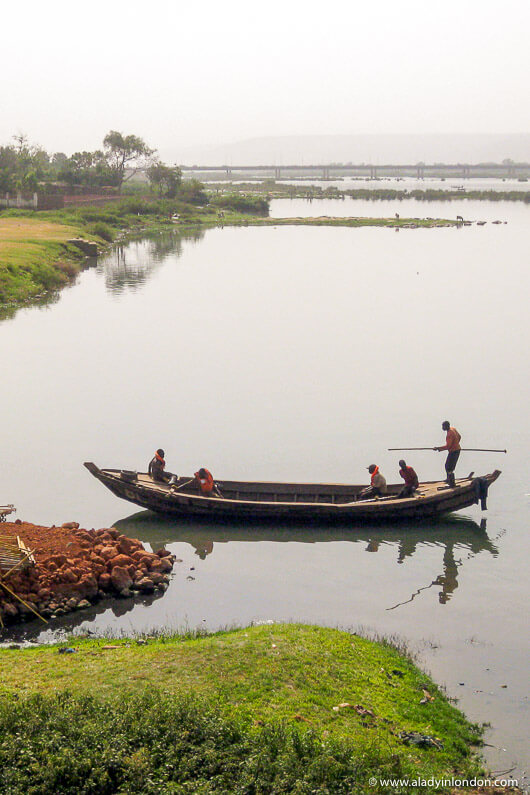
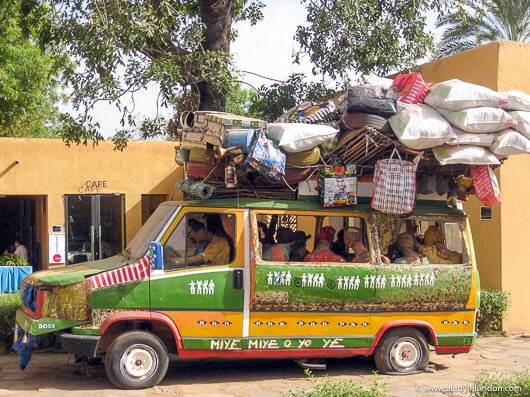
We navigated the furious onslaught of motorcycles, cars, trucks, bright green taxi-buses, and bicycles as we took in the serene views of the meandering Niger River and the pirogues paddling peacefully downstream.
Visit Bamako Markets
Once across, we headed to the markets. I’d wanted to visit Bamako markets since reading about them prior to the trip, and I was excited to finally be able to. Our first stop was the Grand Marche, the main market in Bamako.
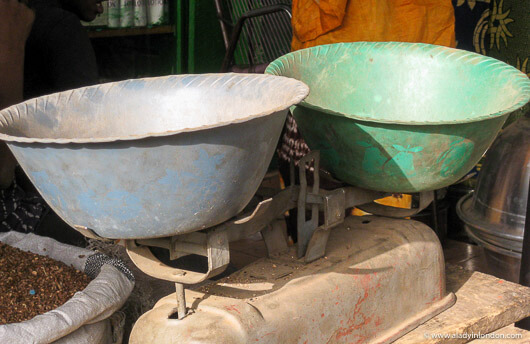
Everywhere we walked there were men selling Chinese-made goods from stalls along the streets, women winding their way through the crowds with huge buckets full of peanuts, carrots, spices, and straw balanced atop their heads, and children selling cigarettes and phone cards.
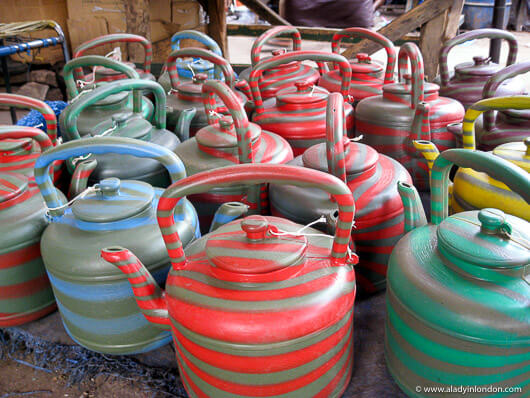
Nearby, boys washed their hands and feet with striped plastic teapots before aligning their prayer mats with Mecca for their five-a-day.
There were markets in Bamako selling clothing and suitcases (so many suitcases!), and food markets full of pungent-smelling fish and tiny bright red peppers with crinkly edges.
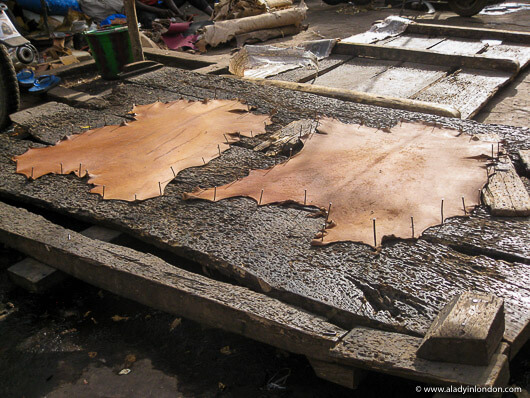
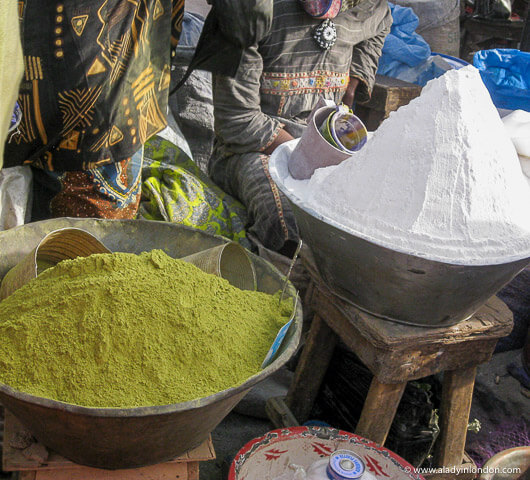
There were spice markets selling powdered soaps and herbs. There was a market that consisted solely of animal hides, some stacked in tall pallid piles and others stretched out on wooden boards with thick black nails lining their perimeters.
We entered a small square surrounded on all sides by wooden stalls, and found ourselves in the middle of an artisan workshop in Bamako.
All the stalls were clinking with the hammering of metal, and the courtyard was filled with traditional wooden masks, musical instruments, crocodile skins, and metal motorbike parts.

Evening in Bamako
When we reached the point of sensory overload, we turned back and took a taxi to The Sleeping Camel.
We ordered two delicious chicken sandwiches for less than £2 and spent the evening relaxing and talking with the other guests and staff.
Traditional Medicine Market in Bamako
The second day of our visit to Bamako, Mali started out similar to the first. Again we walked through the bustling markets, making our way north up the Boulevard du Peuple.
Our goal this time was to reach the traditional medicine market, which we had missed the day before due to a poorly-made map in our guidebook.

The visit to the medicine market in Bamako was a unique experience. Located in a crowded parking lot and consisting of a dozen or so stalls, the market was full of animal parts.
There were shrunken monkey heads, crocodile skulls, tusks of various animals, wild cat and dog heads with ears missing but whiskers intact, and a variety of headless birds with their plumage still protruding from their stiff bodies.

We asked permission to take some photos, and went to work trying to capture the market. It was a far cry from my previous weekend’s photography session at Borough Market in London, but it offered more interesting subject matter.

As we zoomed in on monkey skulls, snake skins, bird beaks, feline femurs, and horse heads, we started to wonder how exactly these symbols-of-death-turned-powers-of-healing were going to be put to use.
We had many guesses, but in all of our inquiring we never found out for certain.

Lunch in Bamako
Shrunken heads and animal parts didn’t exactly help us work up an appetite, but we knew we needed some lunch if we were going to last until dinner without food.
At the suggestion of the owner of The Sleeping Camel, we headed back towards the bridge and stopped for lunch at a little place called Bistro Restaurant Bafing.
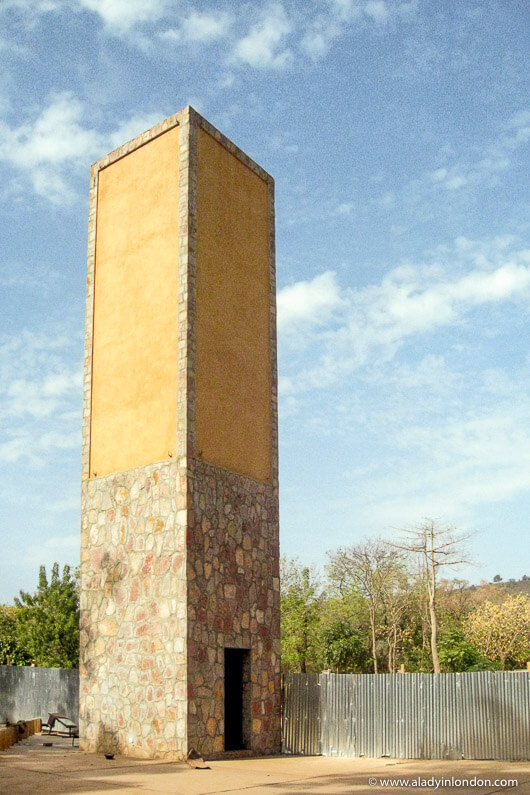
Bistro Bafing was packed. There were local businessmen, families, tourists, and expats all crowded around tables in the courtyard behind the rather small-seeming facade.
Not wanting to miss an opportunity to sample the local cuisine, I ordered the daily special, a northern Malian dish called fakouhoye. Somewhat akin to pureed spinach in color and texture, the taste was much more earthy.
Paired with rice and a few cubes of beef, the fakouhoye proved to be an acquired taste. I ate as much as I could, but unfortunately failed to acquire it. Then again, at £1.20 for the whole meal, it wasn’t such a big loss.

Musee National du Mali
Later that afternoon we went with the owners of The Sleeping Camel to the Musee National du Mali in Bamako, a museum that showcased sculptures, textiles, and historical artifacts from Mali and around West Africa.
Aside from being followed at point-blank range by the museum guards, we enjoyed the permanent collection, which was the most well-curated I’ve seen in Africa.

We also tried to visit the new temporary exhibition on Malian furniture design, but were unceremoniously booted out by a staff member.
Apparently on opening day the only people allowed to view the works are the artists and their guests. Tourists need not apply.
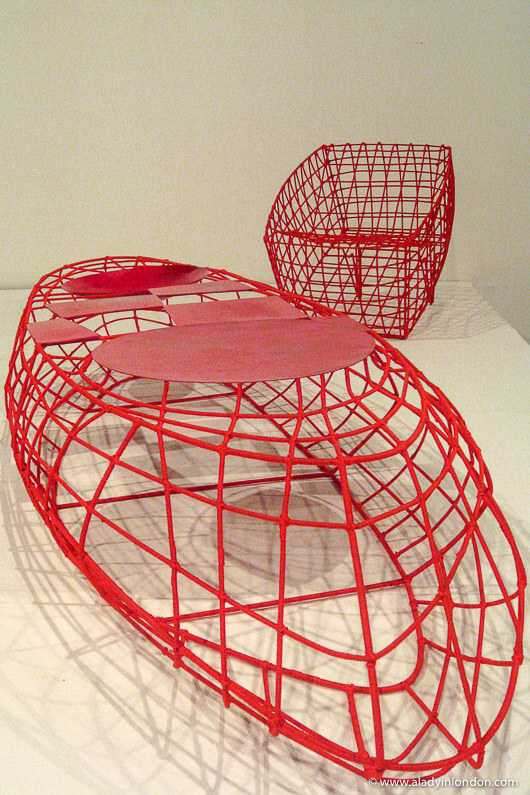
We stayed around for a bit longer, waiting for a free concert the museum featured every Thursday afternoon. The concert started an hour late, as most things do in Bamako, so we entertained ourselves by people-watching.
The crowd was mostly made up of locals, with the odd hippie tourist (and us) mixed in.
Children ran around with bags full of juice and hands full of mango and peanuts while mothers fastened babies to their backs by wrapping long rectangles of colored cloth around themselves and the children, and tying them in two knots at the front of their chests.
The concert finally started. We had great expectations after reading the glowing review of the singer in the leaflet that was handed to us by one of the staff.
Unfortunately, we weren’t overwhelmed by the quality of the performance, so we took off after not very long.
Point G, Bamako
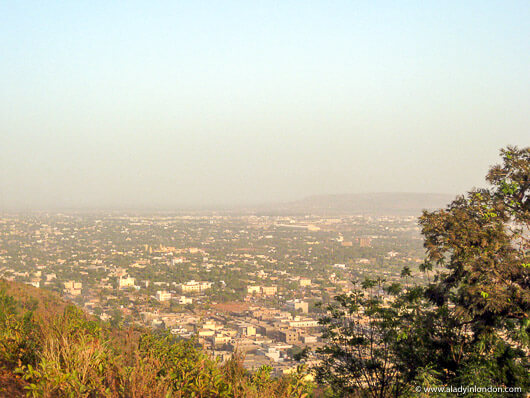
From the museum we headed up to Point G in Bamako, a hilltop vista point behind a large hospital.
The city is in a bowl, surrounded on all sides by hills, so we spent some time at the top of Point G taking in the views of the rooftops below. It was a great place to visit in Bamako.
Live Music in Bamako
After a dinner of traditional Malian stew with rice, we piled into The Sleeping Camel’s air-conditioned van with ten other people and headed out for a night of live music.
Mali is known throughout Africa and the world for having some of the best live music anywhere, and I couldn’t wait to experience it while I was visiting.
We knew that no visit to Bamako would be complete without an evening of live performance, and were excited when we learned one of the owners of our hotel was planning an outing for the evening.

We drove across town to a small club in Bamako that was part open-air and part indoors.
We arrived at 10:30pm and the place was deserted. By 11pm, there were a few more people there. But when the band started playing, the place filled up.
We were entertained for several hours by a trio of musicians and rotating singers, the highlight of which was a boy of no older than 12 who played the drums like a pro. It was a great show.

Visit Bamako and Beyond
We left for the airport right after breakfast this morning, and waved good-bye to Bamako’s rusty red streets.
It was a shame we didn’t have a chance to head further into Dogon Country and up to Djenne, which we discovered upon arrival weren’t as dangerous as we’d read.
We’ll just have to return again to visit Bamako and the rest of Mali. Until then, fabled places like Timbuktu will remain just that.
Find this post helpful? Buy me a coffee!
New here? Join thousands of others and subscribe to the A Lady in London blog via email.
Some of the links in this blog post are affiliate links. At no cost to you, I earn a small commission when you click on them and make a purchase. It doesn’t affect the way you shop, and it’s a great way to support the A Lady in London blog.
Pin it!