
Six months ago I heard about an upcoming Leonardo da Vinci exhibition at the National Gallery in London. It would be the first and most complete display of Leonardo’s surviving paintings ever held (and probably ever to be held). I booked myself a ticket for opening day.
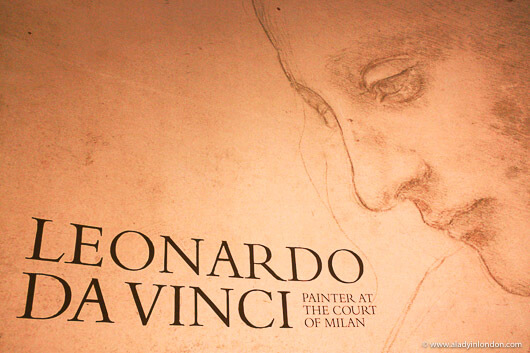
Leonardo da Vinci at the National Gallery
One of the best things about living in London is that the world’s best art comes through the city. From exhibitions at Tate Modern to the permanent collection at the V&A, London’s museums are magnets for masterpieces.
Which is why I was excited to see the works of Leonardo da Vinci at the National Gallery.
I arrived at the museum in Trafalgar Square at 3pm, skipped the long queue for same-day tickets for the da Vinci exhibition, and went down to the entrance of Leonardo da Vinci: Painter at the Court of Milan.
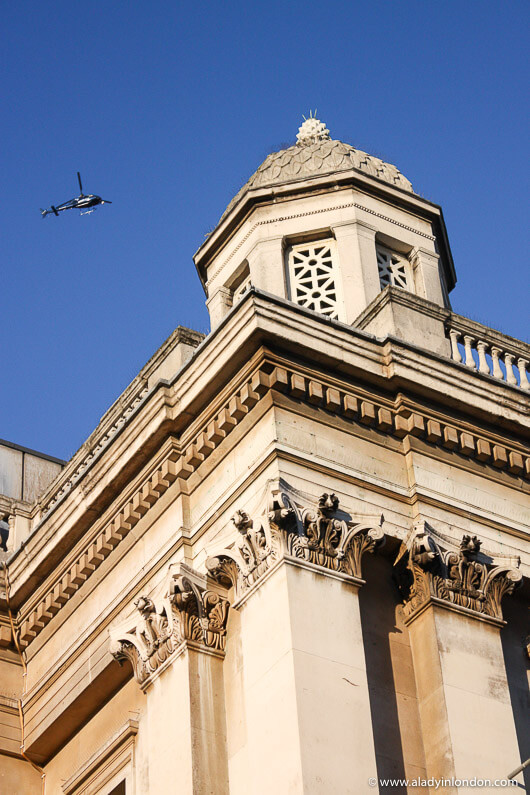
Leonardo da Vinci in London
For the next two hours I walked through seven exhibition rooms displaying sketches and masterpieces that da Vinci completed between the late 1480s and early 1500s.
The first room housed his groundbreaking Portrait of a Young Man (‘The Musician’), which broke with the Milanese tradition of painting portraits in profile.
The stunning work was surrounded by other portraits and sketches by both Leonardo da Vinci and his students.

The next room housed two more famous da Vinci works, The Lady with an Ermine and Belle Ferronniere.
Both depicted idealized beauties of the day. The former was painted to inspire and immortalize love, while the latter was undertaken to represent perfect beauty.
Like the da Vinci works in the preceding room in the National Gallery, they were surrounded by preparatory sketches of everything from animals to human hands.

The third room of the Leonardo da Vinci exhibition housed an emotive unfinished picture simply called Saint Jerome. The tortured soul held a rock in one outstretched hand while his eyes looked in the opposite direction at an unfinished crucifix.
The horizontal line connecting the hand, eyes, and divine depiction also connected the ideas of suffering, spirituality, and divinity.
Despite being unfinished, the painting had a great deal of emotion and energy. It was flanked by sketches of human anatomy that mirrored various elements of the saint’s tortured body.
The fourth room was my favorite. It held both of Leonardo da Vinci’s Virgin of the Rocks paintings.
Facing one another across a room lined with preparatory sketches and copies, the two nearly identical paintings showed da Vinci’s evolution as an artist.
While the earlier painting had an air of naturalism, the later one, which was begun around 10 years after it, showed the artist’s ability to reveal divinity.
Even more stunning than the works themselves was the ability to view them both in the same room. It would have been nice to see them side-by-side, but to see them facing each other was still pretty impressive.
The fifth room housed Leonardo da Vinci’s Madonna Litta, a virgin-and-child painting that was unique in that the Christ child was turned to look at the viewer.
The work was shown among many copies by da Vinci’s students and followers, as well as several sketches like Head of a Woman, which was elegant in its simplicity.
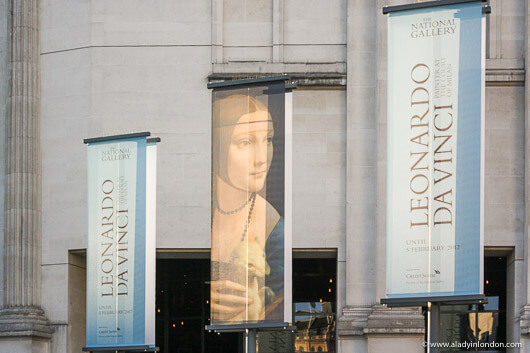
The penultimate room held some of Leonardo’s paintings that were believed to have been made for French King Louis XII. He deposed the painter’s earlier patron, the Duke of Milan, in 1499.
Both Christ as Salvator Mundi and the cartoon of the Virgin and Child with Saint Anne and the Infant Saint John the Baptist were stunning.
The former was haunting in its depiction of the adult Jesus holding a crystal orb as a symbol of the universe. The latter was left incomplete as a suggestion of the divine inspiration of the work.
Before the last room of the exhibition there was a short video presentation on the works and their history. Several of da Vinci’s masterpieces were discussed by experts as a narrator wove a story to connect them all together.
It gave a good overview of the da Vinci exhibition and set the stage for the final room, which housed one of Leonardo’s most famous paintings: The Last Supper.
Upstairs and across several halls in the National Gallery sat a space dedicated to the artist’s painting of Christ’s final meal.
While the original remained in Milan, a life-size replica of The Last Supper was on display along with numerous sketches of each man depicted in the painting.
It was great to see them all together, and to compare the studies of the faces with those in the painting.
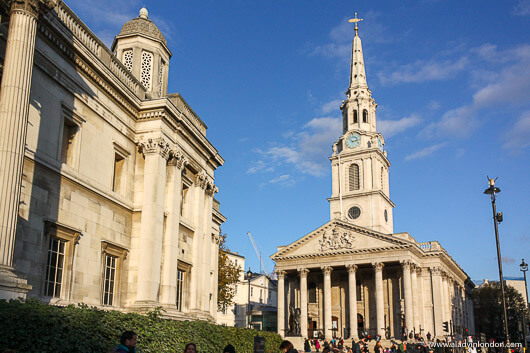
Leonardo da Vinci Exhibition: The Verdict
At the end of the Leonardo da Vinci exhibition in London’s National Gallery I took a moment to appreciate that the works on display had come from so far to be presented together.
Being able to see masterpieces set among the sketches and preparatory drawings that led to their creation was a once-in-a-lifetime opportunity. It made me appreciate living in a city with such amazing art.
Given the exhibition is on for another few months, it might just be worth waiting in the long line for same-day tickets to see it a second time before it is gone forever.
Find this post helpful? Buy me a coffee!
New here? Join thousands of others and subscribe to the A Lady in London blog via email.
What an amazing opportunity!! Thanks for sharing!
Yeah, it was a great exhibition! You should definitely go if you get a chance!
Quick question:
How busy was the gallery? Did you get much time to look at each painting?
I keep thinking it’s going to be so busy you’re not really going to get time to appreciate everything….
Hi Danny! I had the same fear. It’s definitely crowded, but not to the extent that you can’t spend awhile in front of each painting.